ECB warns the AI boom could end in an abrupt market repricing
ECB Vice-President Boris Vujčić warns that a rethink of the AI narrative may trigger an abrupt market repricing. Key points and what it means for Europe.
By Marc Nieto
The European Central Bank (ECB) warns that a reassessment of the artificial intelligence narrative may trigger an abrupt repricing in markets and significant valuation losses. Vice-President Boris Vujčić said so on 16 November 2026 as he opened Euro Finance Week in Frankfurt, two days before the ECB publishes its new Financial Stability Review.
In short
What: the ECB names AI, alongside sovereign debt, as one of the two risks to euro area financial stability that have grown most in a year.
Why: AI funding has spread from equity to debt markets, with record issuance, off-balance-sheet structures and circular deals between chipmakers, cloud providers and AI labs.
How much: cumulative capital expenditure by major US technology firms is projected to reach $5.5 trillion by 2030, according to the projections the ECB cites.
When: the full Financial Stability Review is published on 18 November 2026.
What the ECB said
Vujčić explained that a year ago AI risk was mainly about stretched stock market valuations. Today, according to the ECB, that repricing risk has increased and others have joined it: more debt funding, concentrated exposures, faster AI adoption and potential cyberattacks.
The core message is direct: a rethink of the AI story could set off an abrupt market correction. The Vice-President added that the market fall after the US mid-term elections, although contained, is a reminder to stay cautious about AI valuations.
Boris Vujčić at a public debate in 2021, when he was Governor of the Croatian National Bank. Image: Hrvatska narodna banka / Wikimedia Commons (CC BY 2.0)
The four signals worrying the supervisor
Record debt: large cloud and AI infrastructure providers are increasingly turning to debt markets, with issuance volumes at record highs this year.
Opaque, circular funding: off-balance-sheet structures are growing, as are deals in which chipmakers and cloud providers invest in AI labs that in turn commit to buying their hardware and services.
IPOs: IPO volumes are on track to exceed the dot-com bubble high relative to US GDP. Historically, the ECB notes, such surges have often coincided with market peaks.
Cyber risk: more capable and autonomous AI systems increase the scale, speed and sophistication of cyberattacks. ECB Banking Supervision has asked banks to strengthen their defences.
Why it matters for Europe
The ECB says euro area investment funds have significantly increased their exposure to AI, through both equities and debt. If markets correct, redemptions and forced asset sales could surge. The speech gives no figures for that exposure; they are likely to come with the 18 November report.
The warning also ties into sovereign debt: the huge financing needs of AI may compete for capital with governments and push up borrowing costs for the rest of the economy. All of this with euro area inflation at 4% in October, up from 3.8% in September, driven by energy prices.
Banks, by contrast, hold strong capital and liquidity positions, according to the ECB, which calls for tighter rules for funds and other non-bank institutions.
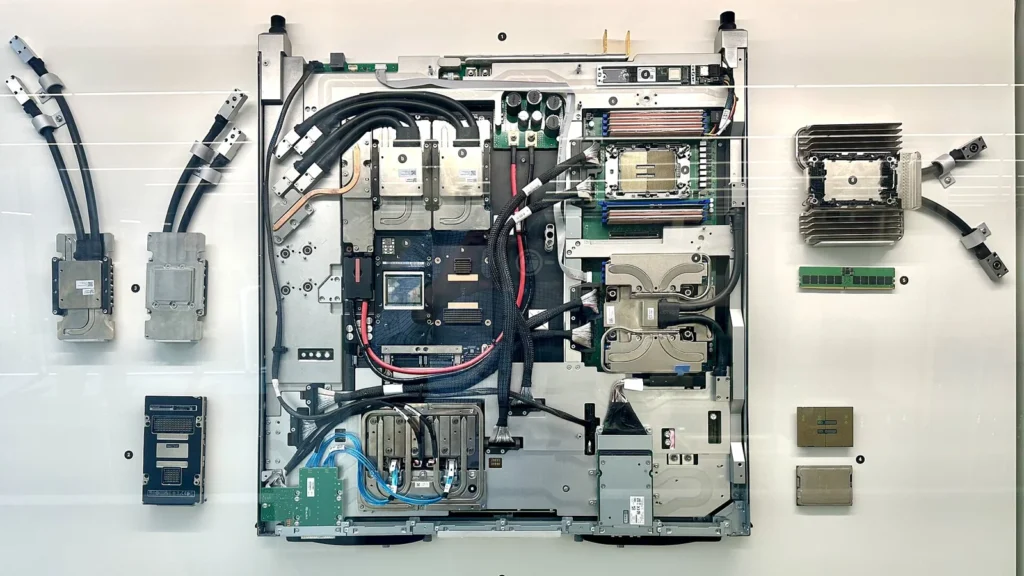
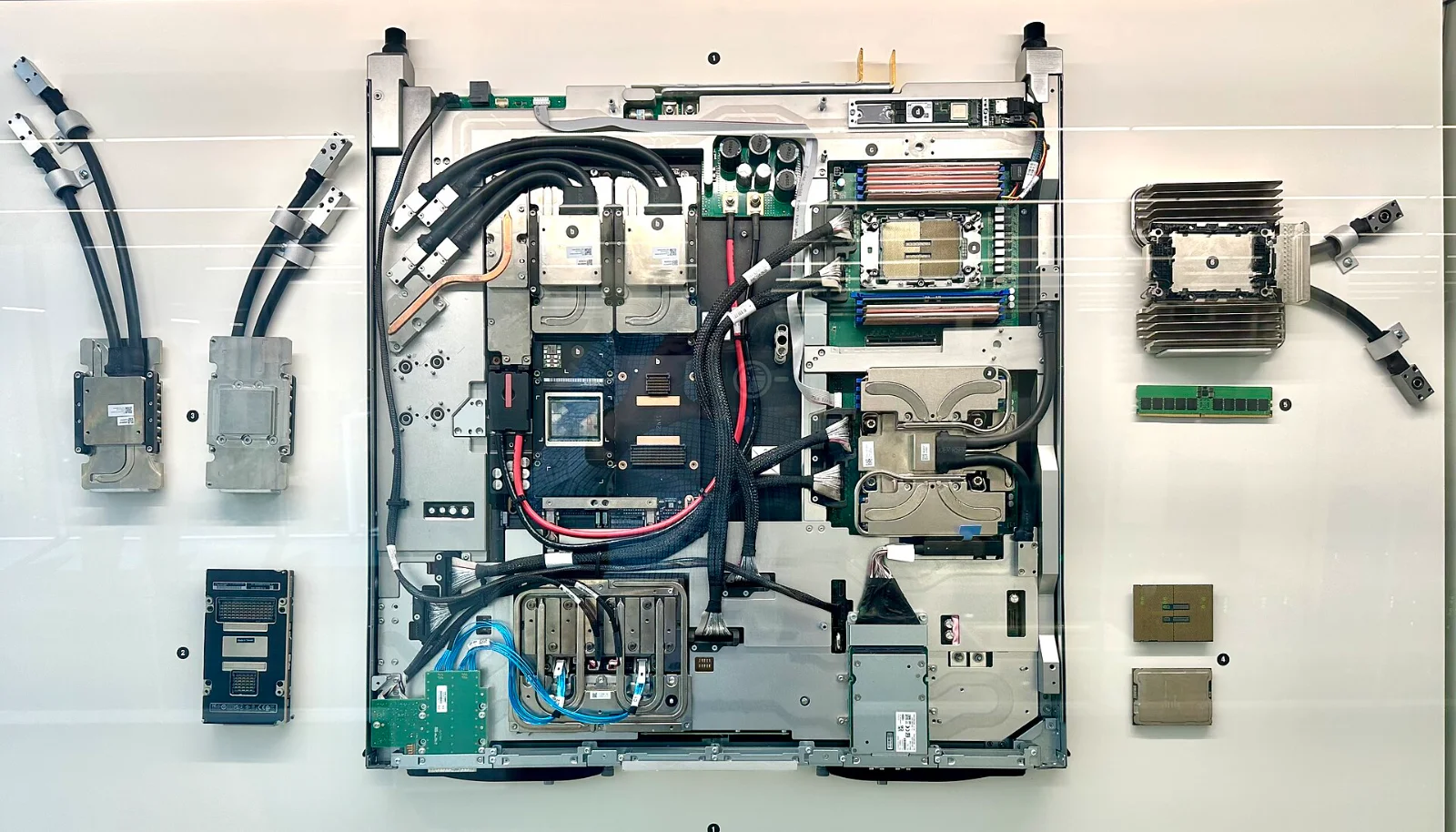
Liquid-cooled GPU blade from MareNostrum 5 at the Barcelona Supercomputing Center. Image: Steve Jurvetson / Wikimedia Commons (CC BY 4.0)
What it means for the Barcelona ecosystem
Tougher rounds: if investors revise their AI expectations, startups will need to show revenue and margins, not just growth. That is the backdrop for the Barcelona AI startups that raised in 2026.
Infrastructure under scrutiny: the city keeps adding compute capacity, such as Blackfuel’s inference cloud. The ECB warns that funding for this kind of asset relies more and more on debt and private credit.
Cybersecurity as a requirement: banks will have to strengthen defences and technology risk management, which creates demand for local providers. The EU AI Act already pushes in the same direction.
What we still do not know
The ECB has not yet quantified European funds’ exposure to AI or the size of a possible correction. The speech is a preview: the detail will be in the 18 November Financial Stability Review and in the special feature on AI and cyber risk that the ECB has released early. This article is for information only and is not investment advice.
Frequently asked questions
Is the ECB saying there is an AI bubble?
It does not use that word for the current situation. It talks about valuations that rest on expectations of extraordinary earnings growth, possibly excessive optimism and the risk of an abrupt repricing, and it compares IPO volumes with the dot-com bubble high.
What is the ECB Financial Stability Review?
It is the report in which the ECB assesses risks to the euro area financial system twice a year. The next edition is published on 18 November 2026.
How could this affect an AI startup?
Indirectly: a market correction usually makes funding more expensive and investment processes longer. Companies with recurring revenue and enough runway hold up better.
At DEXT FORCE we bring founders, investors and banks together to discuss how AI is changing finance, with its opportunities and its risks. Join the waitlist for the next edition.



 By Marc Nieto