A guide for brands: tech event sponsorship formats in Barcelona, measuring ROI, timeline, budget and common mistakes.
By Daniel Campoy
Sponsoring a tech event in Barcelona can get you meetings with decision-makers, months of content and visibility in a specific sector. It can also end up as a logo on a banner nobody remembers. The difference is rarely the budget: it comes down to the format you choose, when you decide and how you measure the return. This guide covers the options a brand has and the mistakes worth avoiding.
At a glance
Formats: naming, booth, own panel, after party activation, private meetings and recorded content. Each serves a different goal.
Return: measured through qualified leads, meetings, mentions and reusable content, with KPIs set before the event, not after.
Timing: the best slots close months in advance; deciding late costs more and narrows your options.
Why sponsor a B2B event
The main argument is access to buyers. In the Freeman Commerce Report 2025, a survey of 1,022 conference and trade show attendees, 32% describe themselves as final purchase decision-makers and the remaining 68% say they have significant or some influence on purchases. For a B2B brand, that audience is hard to gather through other channels.
Barcelona adds a point in its favour: a dense calendar of tech congresses and a local community of startups, investors and fintech companies. What the city does not provide is strategy. That part is up to the brand.
Sponsorship formats: what each one offers
Naming or headline sponsorship. The brand is tied to the event or a stage. Maximum visibility, but the most expensive format and the weakest at direct leads unless combined with others.
Booth. Good for product demos and collecting contacts, as long as someone is ready to hold a conversation and the booth sits in a high-traffic area.
Own panel or talk. Positions the brand as a reference on a topic. It only works if the content is useful rather than an ad.
After party activation. At events that combine a congress with nightlife, the evening is where conversations are more relaxed. A bar, a zone or a well-designed brand experience builds recall and social content.
Private meetings. One-to-one meetings or small tables with selected profiles. At DEXT FORCE this format is DEXT Meetings, usually the closest thing to a measurable commercial return.
Recorded content. Interviews, short clips or recorded sessions the brand can reuse later. At DEXT FORCE this is DEXT Sessions.
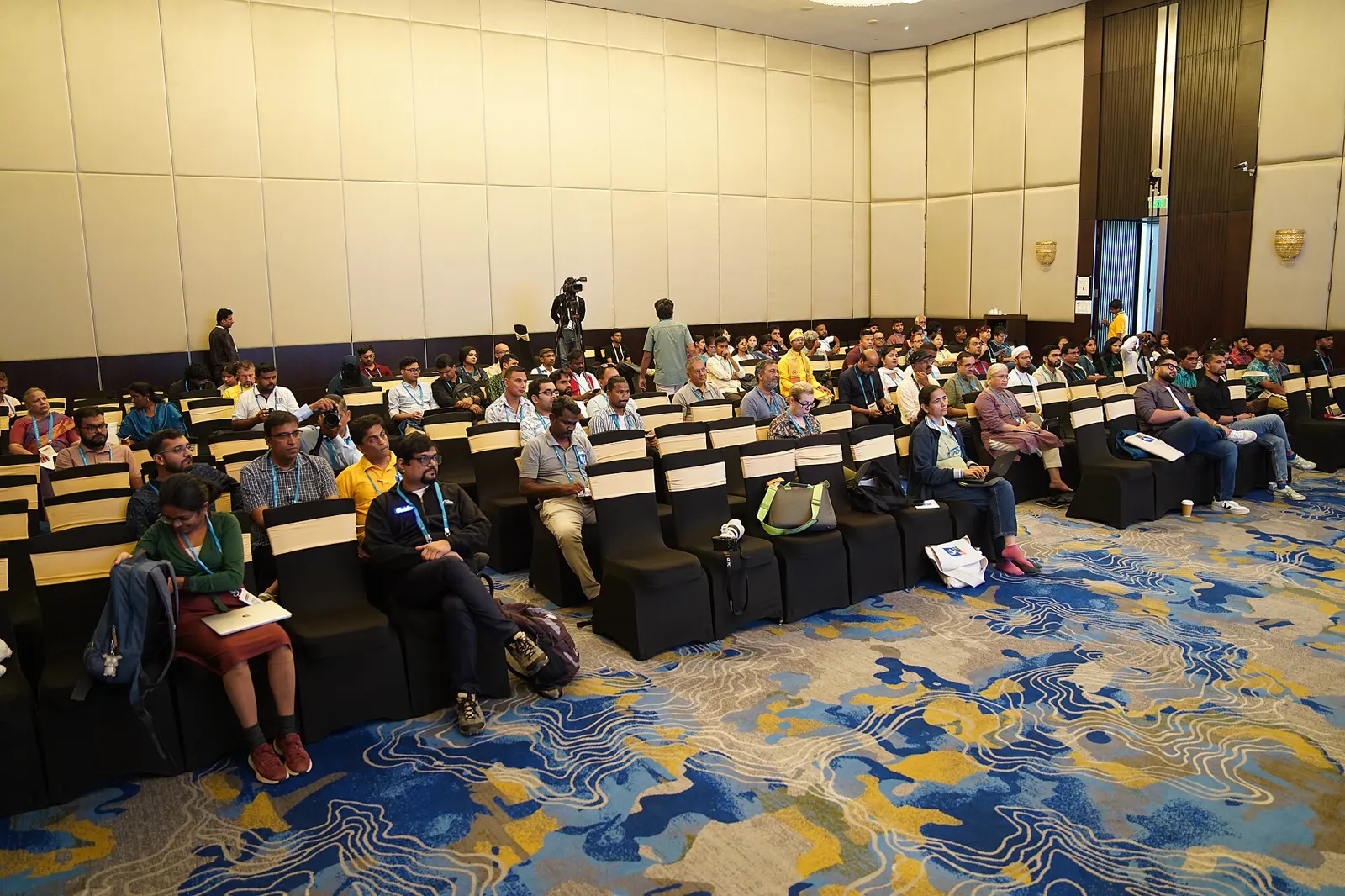
Audience at a panel on AI and technology. Image: Gangulybiswarup / Wikimedia Commons (CC BY 4.0)
How to measure sponsorship ROI
The most common mistake is measuring only what is easy, such as logo impressions or followers gained that day. A more useful framework has four blocks:
Leads and meetings. Qualified contacts, meetings booked at the event and opportunities opened in the following weeks, tagged in your CRM with the event name.
Mentions. Press coverage, posts by attendees and speakers naming the brand, and branded searches around the event dates.
Content. Pieces produced at the event and how they perform in the following months.
Cost per result. Total investment, including travel, materials and team hours, divided by meetings or opportunities generated.
Set KPIs before you sign. If you do not know what number you expect, you cannot tell whether it worked.
Decision timeline and budget
Events usually sell the most visible, limited formats first, such as naming, main stages or private meetings. A sensible sequence:
Define the goal: awareness, demand generation, hiring or investor relations.
Request the deck and audience data: attendee profiles, past editions and previous sponsors.
Negotiate a combined package: visibility plus a conversation format usually beats a single format.
Budget for activation: materials, travelling staff and promotion before and after also cost money.
Plan the follow-up: who contacts each lead and how soon after the event.
On pricing: rates vary widely by event, capacity and format, and there is no reliable public benchmark for Barcelona. Ask several organisers and compare the cost per expected meeting, not the list price.
Common mistakes when sponsoring a tech event
Choosing by size instead of audience. A huge event with a scattered crowd can deliver less than a smaller, well-targeted one.
Showing up without a sales team. A booth without people who can qualify a lead is just decoration.
Turning the panel into an ad. The audience tunes out and credibility drops.
Skipping follow-up. Contacts go cold quickly without a plan for the following week.
Not negotiating content rights. Put in writing which photos, videos and recordings the brand can use, and for how long.
Sponsoring DEXT FORCE
DEXT FORCE combines a congress on finance, AI, startups and crypto with an electronic music festival after party, so brands can mix content, private meetings and evening activations at one event. For meetings with specific profiles, start with DEXT Meetings; for content and positioning, DEXT Sessions.
Frequently asked questions
Which sponsorship format generates the most leads?
Conversation formats, such as private meetings or a staffed booth, usually generate more qualified contacts than pure visibility. Ideally, combine them with some awareness.
How far in advance should a sponsorship be decided?
The earlier the better: limited formats sell first. Several months of lead time leaves room to prepare content, staff and follow-up.
How do I know whether the sponsorship paid off?
Set KPIs before the event (meetings, opportunities, content and mentions) and calculate cost per result so you can compare it with other acquisition channels.
 By Daniel Campoy